
DTF printing has rapidly become a favored method in the apparel industry, delivering vibrant designs on a wide range of fabrics. As a practical, cost-effective alternative to traditional screen printing and even some DTG methods, Direct-to-film transfers open new possibilities for small runs and bold colors. DTF printing for apparel has gained traction because it handles different fabrics with strong color, while offering consistent results for on-demand customization. This guide walks you through the essential steps, why the approach matters for brands, and how to get the best results from your workflow. From choosing equipment with Best DTF printers to optimizing color management, preparation, and post-press care, you’ll gain a practical roadmap for direct-to-film transfers.
Another way to frame this technology is as a film-based transfer system that deposits a design onto a specialized sheet, then bonds it to fabric with heat. This approach mirrors traditional garment decoration in its goal of vibrant color, durability, and repeatable results, but relies on a different medium and workflow. In practice, shops compare it to direct-to-film transfers or to DTG depending on fabric type, volume, and turnaround needs, highlighting its flexibility. Selecting the right equipment, media, and process settings is about balancing print quality with fabric characteristics and production goals.
DTF Printing 101: Understanding Direct-to-Film in Apparel Decoration
DTF printing is a transfer-based method that starts with printing an image onto a special film using pigment inks, followed by a powder adhesive and curing step. The resulting film is then applied to the garment and pressed with heat, transferring the artwork to the fabric. This approach offers a versatile path from digital design to wearable decoration and is often positioned as a practical alternative to traditional screen printing and even some DTG workflows.
What makes DTF printing appealing is its combination of color fidelity, fabric compatibility, and relatively simple setup for small runs. By leveraging a white underbase when needed, DTF can achieve vibrant results on dark garments while maintaining durability and flexibility. This makes it a compelling choice for experiments with bold designs and on-demand production.
DTF Printing for Apparel: Fabric Compatibility, Color, and Underbase Advantages
DTF printing for apparel excels across a wide range of fabrics, including cotton, blends, and even some polyester varieties. The process is designed to preserve color fidelity and texture without sacrificing performance on varied textile substrates. The ability to layer pigments with a white underbase helps designers achieve brightness and legibility on dark fabrics.
In addition to versatility, DTF delivers strong color vibrancy and durability, which supports both small-batch customization and scalable production. The workflow remains relatively straightforward as you expand from one-off prints to larger runs, enabling consistent results with efficient setup and throughput.
Direct-to-Film Transfers vs. DTG: Choosing the Right Method for Your Shop
Direct-to-film transfers describe the core mechanism of DTF: a design is printed on film and then transferred to fabric via adhesive powder and heat. This transfer-based approach contrasts with DTG, which applies ink directly to the garment. Understanding this distinction helps shops select the method that best suits fabric variety, color requirements, and production scale.
DTF vs DTG considerations often center on fabric compatibility, durability, and cost. DTF generally handles blends and dark fabrics more robustly thanks to the white underbase technique, while DTG can offer ultra-soft hand-feel on suitable cotton substrates. For small runs or mixed product lines, DTF can provide a more forgiving setup and cost structure.
DTF Printing Steps: A Practical Workflow from Artwork to Garment
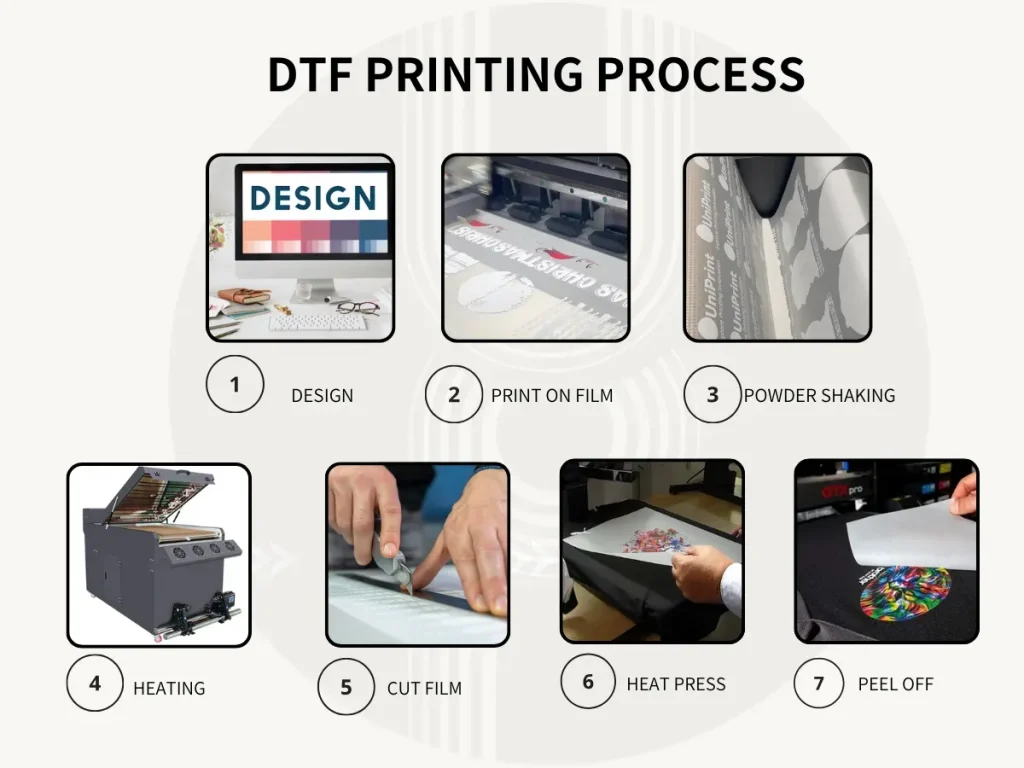
DTF printing steps begin with artwork preparation, where color management and file setup (usually CMYK, with proper bleed and profiles) set the stage for predictable transfers. The next phase is printing on a PET or release film using DTF-compatible inks, focusing on image density, edge sharpness, and high-resolution details.
Following printing, adhesive powder is applied, then cured to bond the powder to the ink on the film. After a secondary handling step—such as weeding, inspection, and transfer preparation—the garment is pre-pressed, the film is placed with the design facing down, and a heat press applies the transfer under controlled temperature, time, and pressure. A post-press cooldown completes the process for a durable result.
Best DTF Printers and Consumables: Selecting the Right Equipment
Choosing the right equipment for DTF starts with identifying reliable “Best DTF printers” that deliver consistent color accuracy, reliable maintenance, and compatibility with film and powder systems. Balancing printer performance with ink chemistry and media compatibility helps ensure repeatable results across runs.
Beyond the printer, consider the surrounding consumables: high-quality films, adhesive powders, and a suitable heat press. Proper calibration, reliable cleaning routines, and color management practices—all supported by a well-chosen setup—translate to more predictable outcomes and easier scaling for bulk or on-demand orders.
Color Management, Troubleshooting, and Quality Assurance in DTF
Effective color management is essential for DTF, including ink calibration, ICC profiles, and test prints to minimize color drift across batches. Planning for a white underbase on dark fabrics and maintaining sharp edges through design adjustments can improve transfer fidelity and legibility.
Common challenges—such as adhesion inconsistencies, cracking, or color fading—can often be traced to curing, powder coverage, or heat-press parameters. Regular maintenance, proactive troubleshooting, and clear care instructions help ensure long-term performance, especially for bulk runs or specialized apparel lines.
Frequently Asked Questions
What is DTF printing for apparel, and why is it popular today?
DTF printing for apparel is a transfer-based process that prints pigment inks onto a special film, applies a curing adhesive powder, and uses heat to transfer the design to fabric. It works on a wide range of fabrics, delivers vibrant colors and a white underbase when needed, and is cost-effective for small runs and quick turnarounds.
What are Direct-to-film transfers and how do they compare to DTG?
Direct-to-film transfers involve printing the image on a transfer film, adding adhesive powder, curing, and pressing the film onto the garment. They offer fabric versatility and lower setup costs, performing well on blends and dark fabrics. Compared to DTG, DTF can be more economical for small-to-mid runs and typically provides durable color on a wider range of textiles when properly cured.
What are the DTF printing steps from artwork to garment?
The DTF printing steps typically are: artwork preparation with accurate color management, printing on DTF film with pigment inks, applying and curing adhesive powder, inspecting and weeding if needed, transferring the film to the garment with a heat press, and allowing the print to cool for a durable finish.
DTF vs DTG: when should you choose DTF over DTG?
Choose DTF when you need strong performance across different fabrics, darker colors, and smaller runs with lower setup costs. DTG is often preferred for 100% cotton fabrics and very soft hand, but may require pretreatment and is less versatile on blends and dark garments. In short, DTF is a safer all-purpose option for mixed fabrics and bulk or small runs.
What should you consider when choosing Best DTF printers for your shop?
Look for reliable pigment inks, compatible film and adhesive powders, a capable heat press, and solid color management support. Also consider printer maintenance, manufacturer support, and total cost of ownership to ensure consistent results for DTF printing for apparel.
How can I troubleshoot common issues in DTF printing for apparel?
Common fixes include ensuring proper curing temperature and time to improve adhesion, calibrating color profiles for accurate DTF printing steps, and maintaining clean print heads. For dark fabrics, verify the white underbase integrity, and run test prints to validate edge sharpness and color vibrancy before production runs.
| Topic | Key Points |
|---|---|
| What is DTF Printing? | Direct-to-Film transfer method: print onto a film with pigment inks, apply adhesive powder, cure, then transfer with heat to fabric. Uses a clear or tinted film that accepts adhesive powder for durable transfers across a wide range of textiles. |
| DTF for Apparel: Why It Matters | Versatile across fabrics (cotton, blends, polyester); vibrant color with a white underbase when needed; cost-effective for small runs; scalable workflow from single items to larger batches. |
| DTF Printing Steps | Artwork prep (CMYK, bleed); print on film; apply adhesive powder; cure; weed/inspect; transfer to garment with heat; post-press cooling and finishing. |
| DTF vs DTG | DTF uses a film+adhesive transfer; DTG prints directly onto fabric. DTF covers a wider range of fabrics with underbase options, potentially more durable for diverse textiles, and often lower setup costs for small runs. |
| Equipment & Materials | Best DTF printers, compatible films and powders, heat press, color management and calibration using ICC profiles, maintenance, and consistent workflow practices. |
| Color Management & Design Tips | High-resolution designs (300 dpi+); plan for white underbase on dark fabrics; account for edge behavior; run test prints on similar fabrics before full runs. |
| Practical Tips & Troubleshooting | Check adhesion and curing, address cracking/fading, ensure uniform white underbase, optimize vibrancy on dark fabrics, verify film alignment and ink density. |
| Maintenance & Best Practices | Regularly clean print heads and film paths; use fresh inks and properly stored powders; schedule routine equipment checks; keep workstation organized to prevent cross-contamination. |
| Case Studies & Real-World Applications | Smaller shops leverage DTF for fast-turn custom orders; mid-sized facilities expand product lines and reduce min orders; suitable for fashion, sportswear, and promotional apparel. |
Summary
DTF printing