
DTF printing, also known as direct-to-film printing, has transformed how brands transfer designs onto fabric. This approach delivers vibrant colors and reliable results across cotton, blends, and dark fabrics. When you compare this approach with traditional garment printing, you’ll notice differences in fabric compatibility and wash-fastness. A streamlined workflow helps ensure consistency and high-quality outcomes. This introductory guide covers the journey from artwork preparation to the final transfer, with practical tips for repeatable results.
Alternatively described as a film-based transfer technique, this process starts with printing artwork onto a carrier film, then applying an adhesive powder and curing it before heat pressing. The method emphasizes color depth, edge definition, and reliable adhesion, making it suitable for a wide range of fabrics. From a production standpoint, it can be cost-efficient for small runs and quick tests while maintaining consistency across items. To maximize longevity, ensure clean film handling, precise heat, time, and pressure, and keep detailed settings for future reference.
Understanding DTF Printing: From Artwork to Direct-to-Film Transfers
DTF printing, also known as direct-to-film printing, enables designs to be printed onto a specialized film, then coated with an adhesive powder, cured, and finally transferred to fabric using heat. This approach yields vibrant color, a soft hand, and strong wash-fastness when properly executed, making it attractive for custom apparel and brand merchandise. Understanding the journey from artwork to durable transfers helps you optimize color reproduction, consistency, and long-term performance.
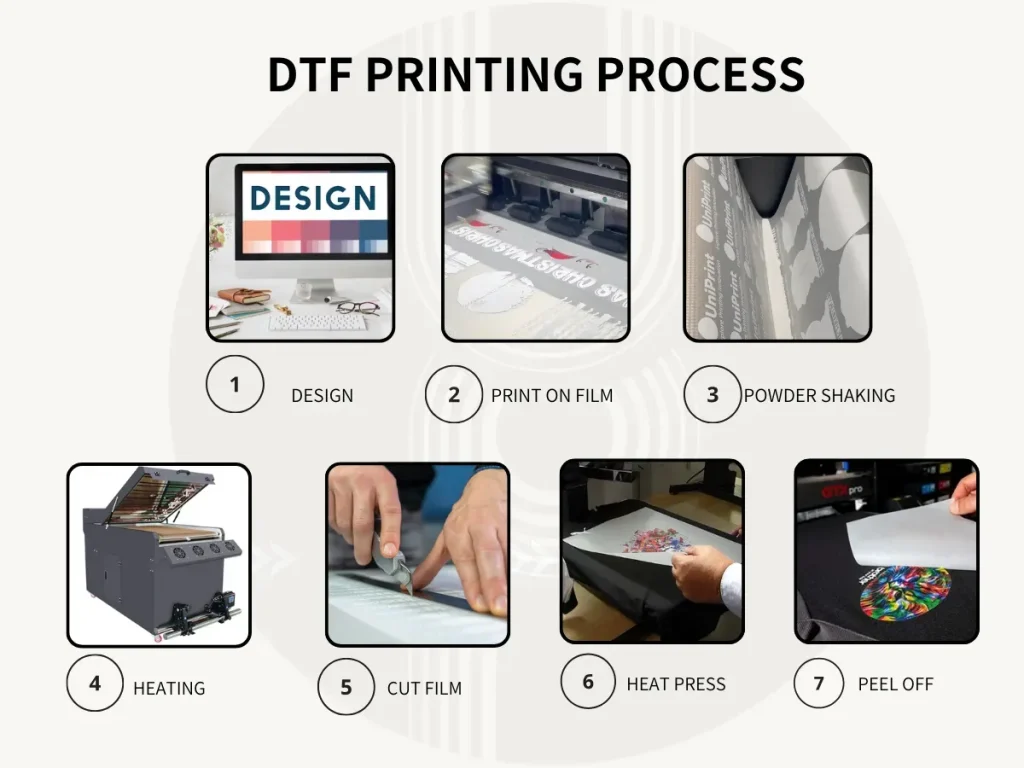
In practice, the process begins with artwork prepared for print, followed by film printing, powder application, curing, trimming, and the final transfer. The DTF workflow leverages the film carrier to deliver robust color saturation across a wide range of fabrics, including cotton blends and dark shirts, while maintaining flexibility for small runs or test batches.
DTF Transfers vs DTG: Choosing the Right Method for Your Fabric Portfolio
DTF transfers offer versatility and durability that often surpass DTG on non-cotton fabrics and darker garments, thanks to the film-based workflow and durable color adhesion. For many operators, DTF transfers provide reliable results with less setup time per color and easier color management across fabrics.
DTF vs DTG comparisons highlight trade-offs between texture, softness, and throughput. When deciding, consider order size, fabric choice, and budget, recognizing that a blended approach—DTF for some items and DTG for others—can maximize both quality and speed while preserving durable transfers.
Materials and Tools for Durable DTF Transfers: Films, Powders, and Heat Presses
Materials and tools play a critical role in achieving durable transfers. A proper DTF printer, transfer films, adhesive powder, a curing or drying unit, and a reliable heat press form the core setup, while high-quality DTF inks support vivid color and wash resistance.
Selecting film thickness, ensuring powder adhesion, and calibrating heat and pressure are essential to consistency. A well-matched combination reduces misprints and contributes to durable transfers across batches, underscoring the importance of a cohesive DTF workflow from design to finish.
Designing for DTF: Artwork, Color Management, and White Underbase Considerations
Designing for DTF requires anticipation of how artwork translates to film. Use 300 DPI or higher, vector graphics for scalable logos, and CMYK color management with soft separations to preserve vibrancy on the film. White underbase is often needed to maintain opacity on dark fabrics, so plan artwork accordingly.
Consider bleed, margins, and layer separations to optimize film coating and powder adhesion. Testing prints help you gauge how colors will reproduce on actual garments, enabling adjustments before production to ensure durable transfers.
DTF Workflow in Practice: A Step-by-Step Path to Durable Transfers
The DTF workflow in practice follows a repeatable path: prepare artwork, print on DTF film with correct settings for color accuracy, and apply adhesive powder while the film is warm. Cure the powder to fix it for transfer and stage the film for alignment on the garment.
Proceed to transfer with the heat press at the recommended temperature, time, and pressure for your film and fabric, then peel the carrier and allow cooling. Throughout, focus on consistency to achieve durable transfers that withstand washing and daily wear.
Care, Troubleshooting, and Longevity of DTF Transfers on Various Fabrics
Care and longevity are central to customer satisfaction with DTF transfers. Provide washing guidelines that minimize heat exposure and abrasion, such as turning garments inside out, cold-water washing, and mild detergents to preserve color and bond strength.
Troubleshooting common issues—misalignment, color bleed, or white underbase failure—should be part of your standard operating procedure. By adjusting the DTF workflow parameters and re-testing on sample garments, you can maintain durable transfers across product lines and fabrics.
Frequently Asked Questions
What is DTF printing and how does it work?
DTF printing, or direct-to-film printing, prints designs onto a specialized film, applies a bonding powder, and then uses heat to transfer the image to fabric. The typical DTF workflow includes printing on film, powdering, curing, trimming, and heat pressing to yield vibrant, durable transfers. This method supports a wide range of fabrics and provides strong color reproduction and a soft hand.
How durable are DTF transfers compared to other methods?
DTF transfers are designed for durability and wash-fastness when produced with proper settings. The film-based bonding and curing process help maintain color saturation and edge integrity, resulting in durable transfers on cotton, blends, and dark fabrics. In many cases, DTF transfers offer longer wear and better wash durability than some DTG results.
What are the key steps in a DTF workflow?
A typical DTF workflow starts with artwork preparation and color management, followed by printing on DTF film, applying adhesive powder, curing the powder, trimming, and finally transferring with a heat press. Each step influences durability, color accuracy, and edge quality, so documenting settings for different fabrics helps maintain consistency in durable transfers.
Can DTF printing be used on different fabrics and colors?
Yes. DTF printing is versatile across fabrics such as cotton, blends, and even darker garments. DTF transfers provide strong opacity and color on various fabrics without extensive pre-treatment, making it a flexible option for durable transfers across product lines.
What design considerations should I keep in mind for DTF printing?
Design for DTF printing should prioritize high resolution (300 DPI or higher), CMYK color management, and soft color separations. Plan for a white underbase on dark fabrics, allow adequate bleed and margins, and map layer separations for multi-color designs to ensure clean edges and durable transfers.
How does DTF compare to DTG for durability and cost?
DTF vs DTG: DTF printing generally offers broader fabric compatibility, robust durability across many fabrics, and cost-effective small-batch production. DTG can deliver a softer hand on certain fabrics and may be simpler for very detailed designs. The best choice depends on fabric type, order size, and required durability of the transfers.
| Section | Key Points | Notes / Implications |
|---|---|---|
| What is DTF Printing and How It Works |
|
Film-based workflow enables robust color saturation and easier handling for small runs; durable transfers across fabrics |
| Designing for DTF Printing: Artwork, Files, and Color |
|
Plan for film adhesion and powder; test prints essential to preserve vibrancy |
| Materials, Equipment, and Setup: What You Need for DTF Transfers |
|
Reliable materials selection affects durability; aim for quality film, powder adhesion, and consistent heat transfer |
| From Design to Transfer: A Step-by-Step DTF Workflow |
|
Follow a repeatable workflow with checks for alignment, curing, and transfer quality |
| Calculation of Costs, ROI, and Practical Capacity |
|
Consider how volume, mix, and setup time affect profitability; DTG vs DTF trade-offs matter |
| Best Practices for Achieving Durable DTF Transfers |
|
Durability hinges on consistent process control and proper storage |
| Troubleshooting Common Issues in DTF Printing |
|
Quick fixes help save time and reduce waste in production runs |
| DTF vs DTG: Understanding the Trade-Offs |
|
Select the method based on fabric choice, volume, and time constraints; combine methods when appropriate |
| Care and Longevity: How to Maintain Your DTF Transfers |
|
Customer guidance boosts transfer longevity and satisfaction |
| Putting It All Together: A Practical Roadmap |
|
Create a scalable, documented process that yields consistent, durable transfers |
Summary
DTF printing offers a robust, versatile path to durable transfers across a wide range of fabrics. By planning with direct-to-film printing in mind, selecting the right films, powders, and a repeatable workflow, you can achieve vibrant, long-lasting transfers that stand up to washing and daily wear. This guide covers the design-to-transfer journey—from artwork preparation to proper curing and heat-transfer parameters—helping you optimize quality, consistency, and production efficiency for custom apparel, gifts, or brand merchandise. Embrace DTF printing to expand your product offerings with reliable results across fabrics and color-driven designs.