
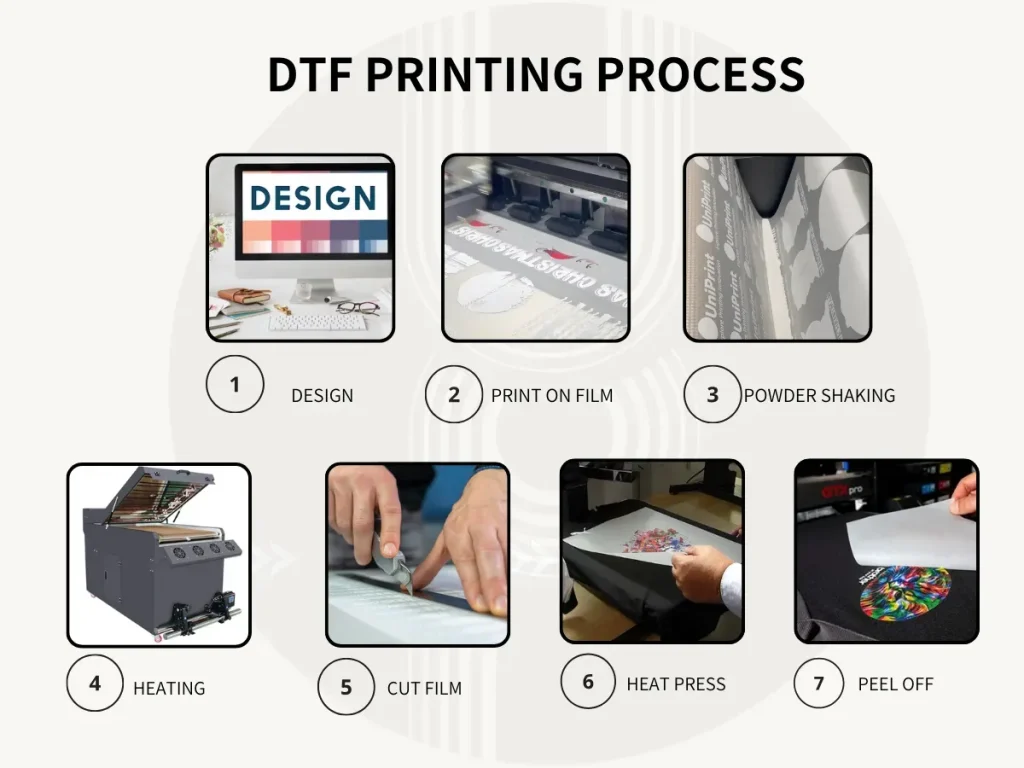
DTF printing has emerged as a versatile and reliable option for decorating garments, offering vibrant color reproduction and a forgiving workflow. For hobbyists and professionals alike, selecting the right set of DTF printing materials and mastering a straightforward process can unlock consistent, shop-ready results. Getting started means mapping a practical workflow—from ink selection to film handling and heat-press timing—with an eye toward repeatable results. A solid setup streamlines production, reduces waste, and helps you scale from small runs to larger orders. With the right techniques, you can achieve durable, vibrant transfers that feel natural on cotton and blends.
Direct-to-film printing can be described as a film-based transfer method for textiles, where artwork is first printed on a specialty film, then bonded to fabric with heat and pressure. In practice, designers and suppliers describe it as a multi-step system that pairs printer output with an adhesive powder and a curing phase, making it accessible to beginners. From the perspective of design flexibility, the terminology shifts toward a film-driven process that supports bold graphics and a soft hand feel on a range of fabrics. Thinking in terms of the full workflow—film, powder, heat, and press—helps creators compare options and plan scalable production. Whether you’re evaluating equipment, sourcing materials, or exploring small-batch decoration, embracing the core concepts of this modern textile transfer technique clarifies what to expect during setup and operation.
DTF Printing in Garment Decoration: What It Is and Why It Works
DTF printing, short for direct-to-film printing, is a versatile method for decorating garments by printing designs onto a specialty PET film using textile inks. After printing, the design is coated with an adhesive powder and cured to activate the bond, creating a durable DTF transfer that adheres to cotton, blends, and other fabrics. This approach supports vibrant color reproduction and a soft hand, while accommodating a wide range of fabrics and design complexity.
Understanding the DTF film and the surrounding DTF printing materials is key to achieving consistent results, whether you’re a hobbyist or running small productions. The workflow centers on the combination of DTF film, adhesive powder, textile inks, and a properly configured DTF printer setup to produce repeatable transfers.
Choosing the Right DTF Printing Materials for Consistent Results
Choosing the right DTF printing materials starts with selecting a reliable DTF film that feeds consistently through your printer, plus adhesive powder that coats the printed ink evenly. Also choose textile inks compatible with your printer and film, and keep a clean supply of accompanying items like PET release film and a heat source.
Having a plan for pretreatment, finishing agents, and color management tools helps you deliver professional-level results across batches, while keeping the process predictable and efficient.
Setting Up Your DTF Printer: Workspace, Calibration, and Color Management
A successful DTF printer setup should begin with a clean, organized workspace and color management at the core. Establish dedicated stations for printing, powder application, and curing, and configure your printer for textiles to improve DTF transfers.
Use calibrated color profiles tailored to the fabrics you use, test print regularly, and ensure proper ventilation and dust control to minimize contamination that could affect film, ink, and adhesive deposition.
Mastering the DTF Transfers Process: From Printing to Transfer
The DTF transfers process starts with printing the design on DTF film using textile inks designed for this workflow, followed by an even coating of adhesive powder and a controlled cure to activate the bond. Proper curing times ensure the powder adheres evenly and remains stable during handling.
With the garment prepped, align the transfer, cover with PET release film, and press at the recommended temperature and pressure to complete the transfer. Post-press care helps maximize adhesion and color fidelity.
Optimizing Curing, Finishing, and Care for Durable DTF Prints
Durability hinges on precise curing times and thoughtful finishing steps that maximize bond strength while preserving a soft feel. Use a compatible curing system or conveyor dryer and follow the manufacturer’s timing for your specific film and adhesive.
Finally, educate customers on proper care—washing inside-out, avoiding high heat, and line-drying when possible—to preserve color, flexibility, and the integrity of the DTF transfers.
Troubleshooting Common DTF Issues for Reliable Output
Common issues in DTF printing include color shifts, white spots, powder clumping, and misregistration, all of which can compromise the final DTF transfers. Diagnosing these problems starts with a review of color management, curing, and film handling.
Address problems by rechecking the printer setup, recalibrating color profiles, reapplying adhesive powder evenly, and verifying garment prep and press parameters to restore consistency across runs.
Frequently Asked Questions
What are the essential DTF printing materials, and how do they impact the final result?
Core DTF printing materials include DTF film, adhesive powder, textile inks, PET release film, and a heat press (often with a curing system). The quality and compatibility of these materials influence adhesion, color vibrancy, and durability, so choosing reliable DTF printing materials helps ensure repeatable transfers.
How should I set up my workspace for reliable DTF printer setup?
Begin with a clean, dust-free workspace and calibrate your printer for textiles, creating ICC color profiles for your fabrics. Designate a powder application zone and a dedicated heat-press area to prevent cross-contamination, and ensure good ventilation and organized substrates.
What is the typical workflow for creating DTF transfers from film to garment?
The workflow starts with printing on DTF film using textile inks, followed by adhesive powder coating and curing. Then transfer the design to the garment with a heat press using the PET release film, applying the recommended temperature and time for strong DTF transfers.
What are normal DTF curing times, and how can I optimize them for durability?
DTF curing times depend on film and adhesive and should follow the film’s guidelines. Use a reliable conveyor dryer or heat source to activate the adhesive and employ a timer to ensure even curing. Run small tests to fine-tune times for your specific materials.
How does DTF film quality affect color accuracy and adhesion?
DTF film quality directly impacts surface smoothness, color reproduction, and how evenly the adhesive powder transfers. Select DTF film with even coating and consistent release to improve registration, wash durability, and the overall feel of the final result.
What common issues occur with DTF transfers and how can I troubleshoot them in DTF printing workflows?
Common issues include faded colors, white spots, misregistration, and transfers peeling. Reassess color management and ICC profiles, verify powder distribution and curing times, and ensure precise alignment and proper fabric prep to troubleshoot DTF transfers effectively.
| Topic | Key Points | Notes |
|---|---|---|
| Introduction | • DTF printing has surged in popularity for garment decoration. • Offers versatility, vibrant colors, and a relatively forgiving workflow. • Provides a balance between image fidelity, durability, and cost for personalized apparel. | Good entry point for hobbyists and professionals seeking practical, reliable results. |
| What is DTF Printing and Why It Works | • Multi-step process: print on PET film, coat with adhesive powder, cure, then transfer with a heat press. • Produces durable transfers on cotton and blends with vibrant color and soft hand feel. | Understanding the workflow helps optimize results and avoid common issues. |
| Core Materials | • DTF film (carrier film) • DTF adhesive powder • Textile inks (water-based or pigment) • PET release film • Heat press or conveyor dryer • Curing system • Reliable DTF printer • Powder shaker or winder • Cleaning supplies and gloves | Foundational items for consistent, repeatable results. |
| Optional but Helpful Elements | • Fabric pretreatment (varies by fabric) • Top coats or finishing agents for durability or hand feel • RIP software and color management tools | Can improve wash durability and color accuracy; adds workflow options. |
| Setting Up Your Workspace | • Calibrate printer for textiles with appropriate color profiles • Maintain a dust-free, ventilated area • Establish powder application and dedicated heat-press zones • Organize substrates by fabric type and color | Prevents defects and improves consistency across jobs. |
| Step-by-Step DTF Process | 1) Artwork prep and color management (high-res, embedded ICC profiles) 2) Print on DTF film (consider mirror imaging and test prints) 3) Powder coat and cure 4) Prep garment and align 5) Transfer with PET film and heat press 6) Post-transfer care and finishing 7) Care and long-term durability | A clear, repeatable workflow reduces errors and returns. |
| Expert Tips | • Choose proven materials and keep stock of reliable brands • Tight color management with fabric-type profiles • Optimize powder curing times • Maintain precise alignment • Control temperature and pressure • QC at every step • Test in small batches before scaling | Practical guidance to improve consistency and quality. |
| Common Issues & Troubleshooting | • Faded colors: review color management and curing times • White spots/gaps: fix powder distribution • Peeling transfers: verify cure and fabric compatibility • Cracking/stiff hand: adjust adhesive amount or add finishing coat | Diagnose and address typical transfer problems quickly. |
| Practical, Beginner-Friendly Approach | DTF printing offers an approachable path to textile customization with a forgiving workflow and measurable learning curve. | As you gain experience, color management and film handling improve for reliable production. |
| Alternatives & Comparisons | • Sits between screen printing and DTG. • More flexible for multi-color designs than some screens and simpler than complex setups for big DTG runs. • Often higher durability on certain fabrics and effective white underbase on dark fabrics. | Helps choose the right method for design needs and production goals. |
Summary
DTF printing is a versatile method for decorating textiles that combines strong color reproduction with a forgiving workflow, making it suitable for both hobbyist projects and professional production. By focusing on the right materials, a well-planned setup, and a repeatable, step-by-step workflow, you can achieve high-quality transfers with excellent durability and color accuracy. This table highlights essential concepts, materials, setup considerations, and practical tips to master DTF printing for reliable results in small runs or ongoing production.