
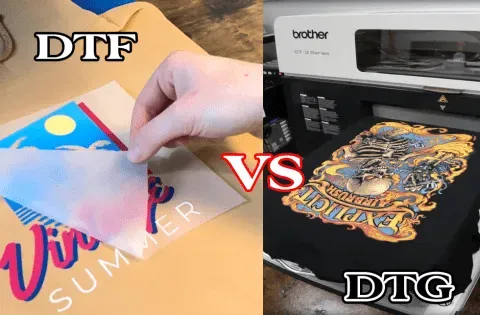
DTF vs DTG is a pivotal topic for apparel brands weighing print quality, durability, and profitability in a crowded market. Choosing between these methods influences product feel, color fidelity, fabric compatibility, production speed, and the ability to scale from pilot runs to full catalog drops, including considerations for brand voice, sustainability commitments, and the practical realities of in-house ink management. This guide explains the key differences, highlighting DTF printing advantages, DTG printing benefits, and the practical implications of DTF vs DTG durability and DTF vs DTG cost comparison to help you decide the best path. We also discuss cost structures, setup complexity, and substrate versatility to show when one method offers a clearer ROI for larger campaigns versus on‑demand, small-batch orders. By the end, you’ll understand how the decision affects your brand’s image, margins, and customer expectations, and you’ll be able to choose the best printing method for apparel brands for your particular catalog.
Viewed from a different angle, the conversation can be framed as film-transfer printing versus direct-to-fabric application. In practice, a printed film is thermally bonded to fabric with an adhesive layer, while direct-to-fabric inks are applied directly to the fibers for a softer hand. For brands planning large catalogs or frequent drops, considering substrate versatility, wash durability, and production throughput helps determine which approach scales most smoothly.
DTF printing advantages for versatile fabrics and large runs
DTF printing advantages extend across a broad spectrum of fabrics. The transfer film combined with a white underbase enables bold, opaque color on dark garments, while the film’s layering supports a wide range of substrate finishes. This substrate versatility makes DTF a strong candidate for brands that run mixed fabric catalogs, including cotton blends and performance textiles. In practice, this means you can maintain consistent color vibrancy without managing multiple pretreatments or separate print processes.
From a cost and operations perspective, DTF printing advantages often shine in large-volume scenarios. The per-unit cost can drop with higher run sizes, and the workflow supports straightforward post-processing—such as glitter effects or specialty finishes—without intricate press setups. For brands aiming to scale a catalog quickly, DTF can reduce downtime between designs while preserving image quality and durability.
DTG printing benefits for cotton-focused lines
DTG printing benefits center on soft hand feel and color depth on cotton-focused products. Ink sits within the fibers, producing a gentle touch and natural drape that many customers associate with premium apparel. DTG excels at gradients and photo-real imagery on light fabrics, delivering smooth color blends that stay true to the original artwork.
Because DTG works well for small runs and on-demand drops, it’s a popular choice for micro-brands testing new artwork or limited editions. The workflow tends to be cleaner for some brands, reducing steps in setup and enabling faster turnarounds for lean inventories. When your product line leans heavily toward cotton, DTG printing benefits in perceived quality and flexibility.
DTF vs DTG durability: which holds up under wash and wear
DTF vs DTG durability is a core consideration for any long-lived apparel line. DTF transfers tend to resist fading on dark fabrics because the white underbase remains robust and the film layer protects the colors through repeated wash cycles. DTG durability can vary with fabric type and care, but on well-pretreated cotton garments, the ink sits closer to or within the fibers, which can yield excellent longevity under standard laundering.
To avoid surprises, brands should test their substrates and inks under typical wash conditions and care labels. For practical durability comparisons, run side-by-side tests across the most common fabrics in your catalog, including dark cottons, blends, and performance textiles, and track color retention, cracking, and stiffness after 20, 40, and 60 wash cycles. This approach clarifies how DTF vs DTG durability plays out in real-world use.
DTF vs DTG cost comparison: ROI for growing brands
DTF vs DTG cost comparison reveals different value propositions by volume. DTF generally offers a favorable cost-per-unit for larger runs because film costs, ink consumption, and press time scale efficiently, especially when you amortize equipment over hundreds of shirts. In contrast, DTG can be economical for small runs or on-demand orders where setup is minimal and the price point supports a quick turn.
Understanding the cost picture requires considering ink and film consumption, printer depreciation, maintenance, and labor. For many brands, the DTG price per unit for small orders may look attractive, but the DTF price per unit becomes more compelling as catalog breadth increases. Running a cost comparison helps determine when to push volumes up and when to keep volumes lean, guiding long-term ROI decisions.
Best printing method for apparel brands: choosing a hybrid approach
Best printing method for apparel brands is not a single answer; it depends on product category, target price, and growth plan. This is where a hybrid approach shines: use DTG for cotton-centered, high-detail items and DTF for dark fabrics, performance textiles, and large catalog launches. Framing the choice this way aligns production with customer expectations, price points, and brand durability goals.
Brands that balance strategies can test both methods on a subset of SKUs and measure outcomes in terms of color fidelity, feel, and customer feedback. The result is a pragmatic path that respects the realities of supply chain speed, fabric diversity, and marketing calendars, rather than locking in a single technique too early.
Decision framework for choosing between DTF and DTG: speed, color fidelity, and scalability
Practical decision framework for choosing between DTF and DTG: start with your catalog’s fabric mix, order size, and required color fidelity. Step one is to map primary fabrics (100% cotton vs blends) and anticipated volumes, then compare image quality, hand feel, durability, and cost across both methods using side-by-side tests.
Step two is to consider speed and scalability: if you need rapid drops across many SKUs, a hybrid setup may be optimal, with DTG for small runs and DTF for larger waves of product. Step three is to monitor performance post-launch, collect customer feedback, and re-evaluate your framework periodically as inks, films, and printers evolve in the market.
Frequently Asked Questions
DTF vs DTG durability: how do durability and wash performance compare across fabrics?
Durability in the DTF vs DTG context depends on fabric and care. DTF generally offers strong durability on dark fabrics due to the white underbase and film transfer, maintaining color fastness after multiple washes. DTG durability varies with fabric type and pretreatment; cotton items with proper care retain color and detail, but performance on blends or darker fabrics can be less consistent.
DTF printing advantages for apparel brands: what are the main benefits of DTF printing advantages for apparel brands?
DTF printing advantages for apparel brands include strong opacity on dark fabrics, broad substrate compatibility, lower unit costs for large runs, easier post-processing and reprints, and longer shelf life. When compared to DTG, DTF offers versatility across more fabric types and higher throughput for catalogs, while DTG shines on cotton and light fabrics.
DTF vs DTG cost comparison: which approach provides better ROI for large runs?
DTF vs DTG cost comparison shows DTF generally lower cost per unit for large runs due to film and ink efficiencies, while DTG is cost-effective for small runs and on-demand due to simpler setup. ROI depends on ink use, film cost, printer depreciation, maintenance, and labor; many brands find DTG advantageous for frequent, low-volume drops, and DTF for catalog launches with hundreds of SKUs.
DTG printing benefits: how does DTG printing benefits compare to DTF in terms hand feel and color fidelity?
DTG printing benefits include a softer hand feel and natural drape on cotton, plus superior gradients and photo-quality on light fabrics. For small runs and on-demand, DTG can offer a cleaner workflow, with high-detail artwork benefiting from subtle color transitions.
Best printing method for apparel brands: is DTF vs DTG the right choice for your fabric mix?
The best printing method for apparel brands depends on fabric mix, product category, price point, and growth plan. Many brands adopt a hybrid approach: DTG for cotton-focused, high-detail items and DTF for dark fabrics and broader catalog drops. Regular reassessment helps adapt to new inks, films, and printers.
DTF vs DTG: production speed, setup, and scalability?
DTF vs DTG production speed and scalability: DTG often offers faster setup for single items and strong on-demand efficiency, while DTF requires film preparation, curing, and heat pressing but can be highly automated for high-volume lines. For rapid-turnaround multi-SKU campaigns, plan a production flow that minimizes downtime and aligns with order mix and ink costs.
| Aspect | DTF | DTG |
|---|---|---|
| How it works | Printed film with CMYK (often with a white underbase) is heat-transferred to fabric using adhesive; finishing steps lock in the image. | Ink is printed directly onto the garment with a solvent-free system; ink sits on the fabric surface and is absorbed, yielding a softer hand on cotton. |
| Core considerations for apparel brands | Versatile substrate support (cotton, poly blends, dark fabrics); strong color on dark fabrics; favorable cost per unit for larger runs; durability and total cost to balance. | Soft hand feel on cotton; best for light fabrics; strong gradients and high-detail on white/light fabrics; efficient for small runs or on-demand; cleaner workflow for some brands. |
| Durability, color, and texture differences | Vibrant colors on a wide range of fabrics (including darks) due to white underbase/film transfer; generally durable on dark fabrics; wash durability depends on inks. | Softer hand feel since ink sits in the fabric; gradients and photo-quality imagery on light fabrics; durability varies with fabric type and care. |
| DTF printing advantages |
|
DTG printing benefits
|
| DTF vs DTG cost considerations and ROI |
|
|
| Substrate versatility and fabric considerations |
|
|
| Production speed, setup, and scalability |
|
|
| Practical decision framework for choosing between DTF and DTG |
|
|
| Best printing method for apparel brands: a balanced view |
|
|
| What customers notice and how to communicate it |
|
Summary
Conclusion