
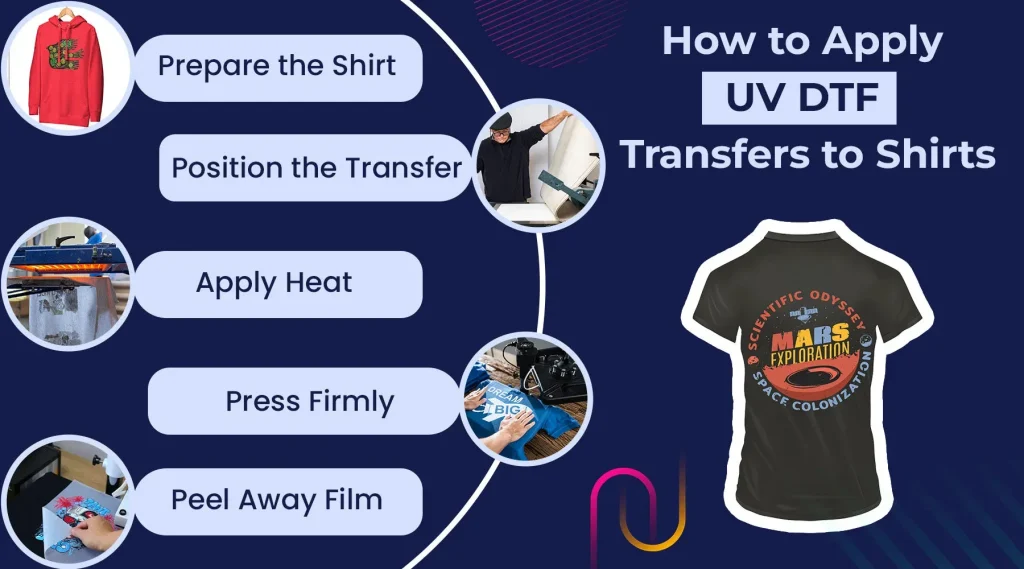
UV DTF Transfer represents a bold, on-demand path for decorating apparel, accessories, and select hard goods, delivering vivid color and rapid curing that set it apart from older DTF technologies while expanding the palette of substrates brands can embrace in modern campaigns and product drops. This introductory overview contrasts on-demand UV-driven solutions with established textile methods, outlining the core considerations brands weigh when balancing creative flexibility and scalable production, including color control, edge crispness, substrate versatility, and the practical realities of run-lengths in commerce-driven programs. While UV printing durability is highly substrate-dependent, the rapid cure can yield bright, compliant results across plastics, glass, and certain coated surfaces, whereas textile-focused approaches rely on inks and finishes designed for fabrics and wash cycles. For teams evaluating total cost of ownership, a cost comparison UV DTF vs Traditional DTF helps quantify the trade-offs between upfront investments, maintenance, and unit economics, guiding decisions about whether on-demand capabilities, faster time-to-market, or bulk textile efficiency best align with your assortment, margins, and channel strategy. Ultimately, successful integration rests on a brand strategy that considers the brand impact of DTF printing, customer expectations, and product portfolio, supporting a hybrid approach where non-textile items and short-run garments leverage UV-adapted workflows while high-volume apparel relies on the traditional DTF pipeline.
UV DTF Transfer: On-Demand Color and Substrate Flexibility
UV DTF Transfer uses UV-curable inks printed on a printable film, followed by a heat-and-pressure transfer. The defining feature is the UV-curing step, which hardens the ink almost instantly, producing highly vibrant colors and crisp edges on textiles as well as a growing list of hard surfaces.
This rapid cure enables on-demand customization and quick turnarounds, making UV DTF Transfer an attractive option for limited-edition drops, personalized items, and test runs.
Beyond textiles, the method expands your product range to non-fabric substrates, enabling new brand experiments without committing to large-scale textile production. This flexibility aligns with DTF transfer benefits by broadening application opportunities while maintaining strong color and detail.
Traditional DTF: The Textile Workhorse for Durable Garments
Traditional DTF prints designs onto a clear film with water-based inks, then uses a powder adhesive before transferring to fabric with heat and pressure. This process yields solid color reproduction and a soft hand on textiles, making it a reliable choice for apparel decoration.
Traditional DTF has become a workhorse in apparel decoration, delivering strong color reproduction and a soft hand on textiles while offering scalable production for larger runs. Its mature ecosystem of inks, primers, and powders supports consistent results and predictable performance across many fabric types.
Because of its established infrastructure, Traditional DTF remains a dependable option for brand teams seeking cost-effective scalability and dependable wearability, reinforcing the brand experience through comfortable texture and reliable wash performance.
Cost comparison UV DTF vs Traditional DTF: Production Economics and ROI
When evaluating cost comparison UV DTF vs Traditional DTF, consider upfront equipment investment, ongoing consumables, and maintenance, not just per-unit price. UV DTF systems require UV lamps and curing hardware, which can shape initial budgets and ongoing operating costs.
UV DTF can offer competitive total cost of ownership for small-batch or on-demand work, particularly when inventory risk is high and rapid reprints are needed. Traditional DTF often benefits from established pricing structures, readily available powders, and film supplies, which can lower per-unit costs at scale.
For brands balancing catalog breadth and production efficiency, the decision hinges on total cost of ownership, including downtime, waste, and labor. A pilot run that mirrors your actual product mix provides practical insight into which method delivers the best ROI over time.
Durability and Wash Performance: UV Printing Durability Across Substrates
Durability and wash performance depend on substrate, curing, and adhesion, with UV printing durability closely tied to proper curing on compatible materials. When UV DTF is cured correctly, color retention and edge stability can be excellent, especially on hard surfaces and select fabrics.
Traditional DTF durability has a proven track record for washfastness on garments when inks, adhesive powder, and heat-press parameters are optimized. This reliability makes it a steady choice for wearables that see frequent washing and abrasion.
To minimize risk, brands should conduct substrate testing, wash tests, and real-world wear trials to validate durability before committing to full-scale production, ensuring that the chosen method meets long-term performance expectations.
Brand Impact of DTF Printing: How Each Method Shapes Perception
Brand impact of DTF printing shows up in color fidelity, texture, and the perceived premium of your products; UV DTF often enhances vibrancy across a mixed product line, which can boost visual impact in marketing and retail displays.
On textiles, Traditional DTF can deliver a soft hand and dependable durability that supports comfort-forward branding and consistent wearability across large product catalogs.
Across channels, maintaining consistent finish and color across apparel and non-fabric items strengthens visual branding and helps meet customer expectations, reinforcing a cohesive brand promise.
Choosing the Right Path for Your Brand: Testing, Validation, and Hybrid Approaches
Choosing the Right Path for Your Brand starts with a clear product mix, durability targets, and go-to-market timing. Define which items are textiles, which are hard goods, and which require rapid, on-demand customization.
Run a controlled test: sample a representative mix of textiles and hard goods, evaluate color accuracy, edge definition, feel, and durability, and collect feedback from stakeholders and a small customer panel to gauge branding alignment.
A hybrid approach can maximize outcomes: leverage UV DTF Transfer for hard goods and on-demand items while applying Traditional DTF to high-volume textiles to balance brand impact, finish quality, and scalability, leveraging the DTF transfer benefits of both methods.
Frequently Asked Questions
What is UV DTF Transfer and how does it compare to Traditional DTF in practice?
UV DTF Transfer uses UV-curable inks printed on a printable film with an instant UV cure, delivering vibrant color and broader substrate compatibility. Traditional DTF uses water-based inks with a powder adhesive for textiles, providing a strong color and a soft hand. In short, UV DTF transfer benefits include versatility and edge sharpness, while Traditional DTF excels as a proven DTF transfer method for apparel.
How does UV printing durability compare between UV DTF Transfer and Traditional DTF on textiles?
Durability depends on substrate, ink chemistry, and curing. UV printing durability with UV DTF Transfer can be excellent on compatible substrates when cured properly, but wash performance on textiles varies with cure settings and material. Traditional DTF has well-documented washfastness on garments when applied correctly.
What is the cost comparison UV DTF vs Traditional DTF for small-batch on-demand production?
Cost comparison UV DTF vs Traditional DTF shows higher upfront and ongoing ink costs for UV DTF, offset by fast curing and on-demand capability for limited drops. Traditional DTF benefits from established workflows and lower per-unit costs for larger textile runs. Consider total cost of ownership, including maintenance and downtime.
Can UV DTF Transfer print on non-textile surfaces, and what is the brand impact of DTF printing for hard goods?
Yes, UV DTF Transfer can print on select hard surfaces beyond textiles, expanding product lines. This broadens brand impact of DTF printing by delivering vivid visuals across hard goods like mugs or cases. Substrate testing and curing parameters are important to ensure durability and color fidelity.
What are the main DTF transfer benefits when choosing UV DTF Transfer over Traditional DTF for limited-edition drops?
DTF transfer benefits with UV DTF include rapid curing, on-demand customization, and bright color punch on a broader range of substrates, supporting limited editions. Traditional DTF remains strong for bulk textile production with a soft hand and scalable costs. Balance color vibrancy, durability, and total cost.
What testing steps should brands perform to validate UV DTF Transfer versus Traditional DTF before committing to production?
Run a pilot with representative textiles and hard goods, evaluating color accuracy, edge crispness, and tactile feel under different lighting. Perform wash tests on fabrics and wear tests on hard surfaces, then assess total cost of ownership and brand alignment. Gather feedback from product, marketing, and customers to decide the best mix.
| Topic | Key Points |
|---|---|
| What is UV DTF Transfer? | UV-curable inks printed on a printable film; UV curing step hardens the ink almost instantly, enabling vibrant colors and sharp edges. Works on textiles and some hard surfaces; strong option for on-demand customization and color punch. |
| What is Traditional DTF? | Direct-to-Film printing with water-based inks, a powder adhesive, and transfer via heat/pressure. Strong color reproduction, soft hand on fabrics, and cost-effective scalability for apparel; mature ecosystem of inks, primers, and powders. |
| Key Differences at a Glance | Substrate scope: UV DTF broad (including some hard goods); Traditional DTF textile-focused. Ink chemistry/finish: UV cures instantly; Traditional DTF uses water-based inks plus adhesive powder. Durability/Wash: UV durability on suitable substrates; Traditional DTF washfastness proven on garments when applied correctly. Production workflow: UV DTF enables fast, on-demand customization; Traditional DTF relies on film, powder, and a pressing step. Cost/Equipment: UV DTF higher upfront/ongoing costs; may be cost-competitive for small-batch/on-demand; Traditional DTF established and often cheaper for high-volume textile production. |
| Pros of UV DTF Transfer | Vibrant, high-contrast color on many substrates; rapid curing for on-demand; can print on non-textile surfaces; sharp edge definition for detailed designs. |
| Cons of UV DTF Transfer | Higher upfront and ongoing ink costs; substrate compatibility varies; safety, maintenance, and room considerations for UV equipment. |
| Pros of Traditional DTF | Excellent textile results with soft hand; strong wash durability when applied correctly; broad ecosystem of inks, primers, powders; scalable for larger textile runs; versatile across cotton, blends, and some synthetics. |
| Cons of Traditional DTF | Color vibrancy can depend on ink formulation and alignment; transfer steps add time for very small runs; limited non-textile applications without workflow changes. |
| Cost, Speed, and Production Considerations | Total cost of ownership matters: UV DTF can be advantageous for rapid prototyping and on-demand jobs; Traditional DTF suits high-volume textile production. Testing substrate compatibility, curing, and workflow impact is essential to determine true costs and throughput. |
| Brand Impact and Use-Case Scenarios | UV DTF is well-suited for limited editions, on-demand personalization, and hard goods; Traditional DTF excels for everyday wear and textiles; a hybrid approach (UV DTF for hard goods, Traditional DTF for textiles) can optimize color, durability, and speed across a multi-product catalog. |
| Choosing the Right Path for Your Brand | Define product mix (textiles vs. hard surfaces); assess durability and finish needs; consider color and print quality; plan for speed and inventory; run pilot tests to evaluate overall cost and performance. |
| How to Test and Validate for Your Brand | Select representative products; evaluate color accuracy and edge sharpness under different lighting; perform wash tests on textiles and wear tests on hard goods; gather feedback from stakeholders and customers; compare total cost of ownership to identify the best fit. |
Summary
Conclusion: UV DTF Transfer and Traditional DTF each offer compelling advantages, depending on your product mix, brand objectives, and production realities. UV DTF Transfer excels in on-demand personalization, broad substrate compatibility, and vivid color impact on a range of non-fabric items. Traditional DTF remains the workhorse for textiles, delivering strong durability, a comfortable hand, and cost efficiency at scale. By evaluating your catalog, durability standards, finish expectations, and production constraints, you can select the approach that aligns with your brand’s vision and customer promise. In many brands, a thoughtful mix of both technologies—leveraging UV DTF for hard goods and Traditional DTF for apparel—delivers the best of both worlds: a vibrant, durable product line that scales with demand while preserving brand consistency across touchpoints.