
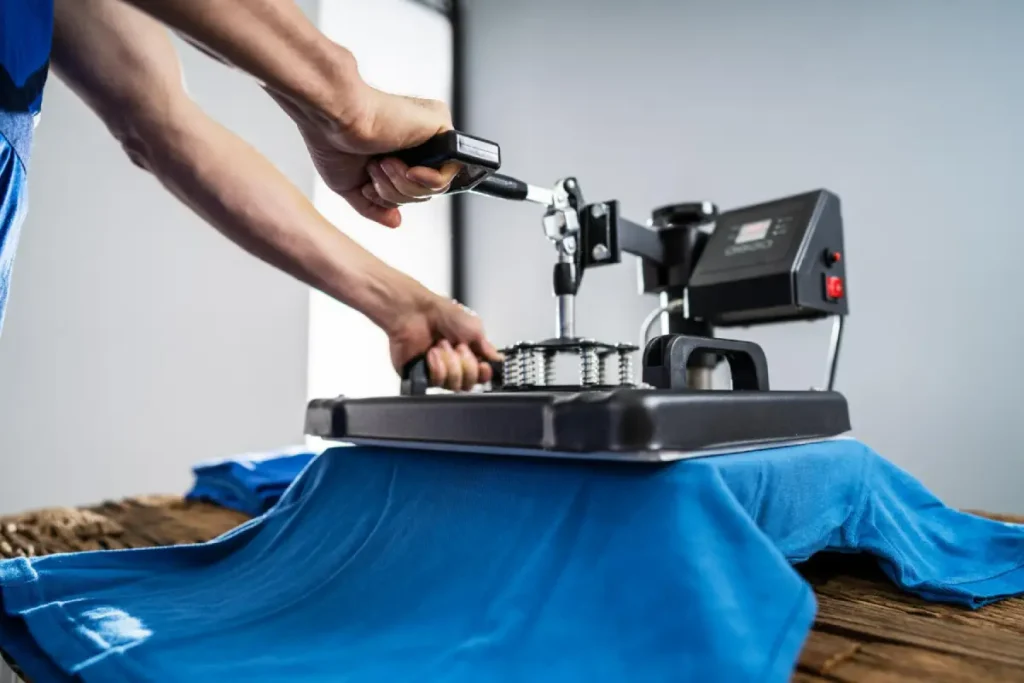
In the rapidly maturing landscape of high-performance garment decoration, the “DIY” era is giving way to the “Industrial-Standard” era. Many brands starting with dtf technology hit a growth ceiling because they view the printing process as a creative pursuit rather than a technical manufacturing cycle. To command premium shelf space in retail boutiques, you must shift your mindset from “pressing shirts” to “engineering textile bonds.”
The premium finish that retail customers pay for is entirely a result of **Thermomechanical Calibration**. When you apply a dtf transfer, you are forcing a polymer-based adhesive into the molecular structure of a textile fiber. If this process is not governed by precise data, your brand’s quality will be inconsistent. Harwin’s methodology focuses on the “Three Pillars of Production”: Calibration, Environment, and Documentation.
The Physics of Fiber Integration
Achieving a retail-grade “hand-feel” (where the print is soft and flexible) requires a delicate balance of heat and force. If your prints feel rigid, you aren’t achieving integration; you’re achieving surface-level adhesion. To ensure your production meets professional standards:
- Surface Normalization: Never skip the pre-press. A 5-to-10 second cycle is the minimum requirement to evacuate trapped moisture, which acts as a microscopic barrier to adhesive penetration.
- The Pressure Equation: Adhesion is 60% heat and 40% pressure. Using a press with a digital PSI sensor is the only way to replicate the bonding force required for long-term wash durability.
- Stabilization Dynamics: The cooling phase is where the structural integrity of your print is solidified. Never “fast-peel” while the transfer is hot; allow the adhesive to reach an equilibrium state with the fabric fibers.
The Strategic Power of Regional Supply Chains
Inventory risk is the primary obstacle to brand scaling. Every dollar you spend on pre-printed shirts is capital that isn’t being spent on your next big design release. Searching for dtf transfers near me is not just about convenience; it is a search for Operational Agility. By partnering with a technically capable regional printer, you can transition to a “Demand-Pull” manufacturing model.
This localized partnership transforms your business. You get access to specialized R&D—like testing high-stretch powders for athletic performance wear or matte-finish films for luxury streetwear—without needing to manage the hardware yourself. This is the “Asset-Light” strategy that allows boutique brands to produce with the quality of national retailers while retaining the creative speed of an agile startup.
Institutionalizing Quality Assurance
If your brand’s quality is defined by the “intuition” of your staff, your business is inherently unscalable. To transition into a high-tier apparel label, you must codify your knowledge into a **Standardized Production Protocol (SPP)**. This is the master document for your workshop, detailing the exact PSI, thermal curve, and cooling duration for every fabric SKU you offer.
Furthermore, internal durability testing is not optional. You should subject samples from every production run to “Accelerated Wear Audits”—industrial-grade laundry cycles that exceed typical home use. When you can market your brand with an ironclad, data-backed durability guarantee, you justify premium price points. You aren’t just selling a graphic on a shirt; you are selling a long-term, stress-tested, professional asset.
Frequently Asked Questions
Why does “pre-pressing” make a measurable difference in print longevity?
Pre-pressing is a moisture-evacuation technique. Fibers are natural moisture traps. When your 300°F heat press hits those trapped water molecules, they turn to steam instantly, creating a physical gap that prevents the adhesive from fully integrating into the textile weave.
How do I differentiate high-end transfers from mass-market ones?
Look for “Elastomeric Recovery.” A high-end transfer should stretch and retract alongside the textile without creating white stress marks or micro-cracks. If the graphic feels brittle when the fabric is pulled, the adhesive formulation is too rigid for long-term retail use.
Is DTF better for high-end synthetic athletic gear?
It is the superior choice, provided you use the correct chemistry. Synthetic fibers are heat-sensitive. Always use “low-melt” adhesive powders and perform a thermal gradient test to find the minimum temperature required to achieve a secure bond without damaging the fabric fibers.
What is the most effective way to audit my production output?
Implement the “Stress-to-Failure” protocol. Select one garment from every production batch and run it through a heavy-duty laundry cycle with high-heat drying. If the graphic shows zero degradation after five cycles, your production process is fully calibrated for the premium retail market.
Building a successful, high-quality apparel brand is a journey of continuous technical refinement. By mastering the potential of dtf, you position your brand to compete at the highest level of the custom merchandise market. Harwin is committed to providing the industry insights you need to turn your production floor into a professional, profitable enterprise. Start optimizing your workflow today—your commitment to quality is the most valuable investment you can make for your brand’s future.