
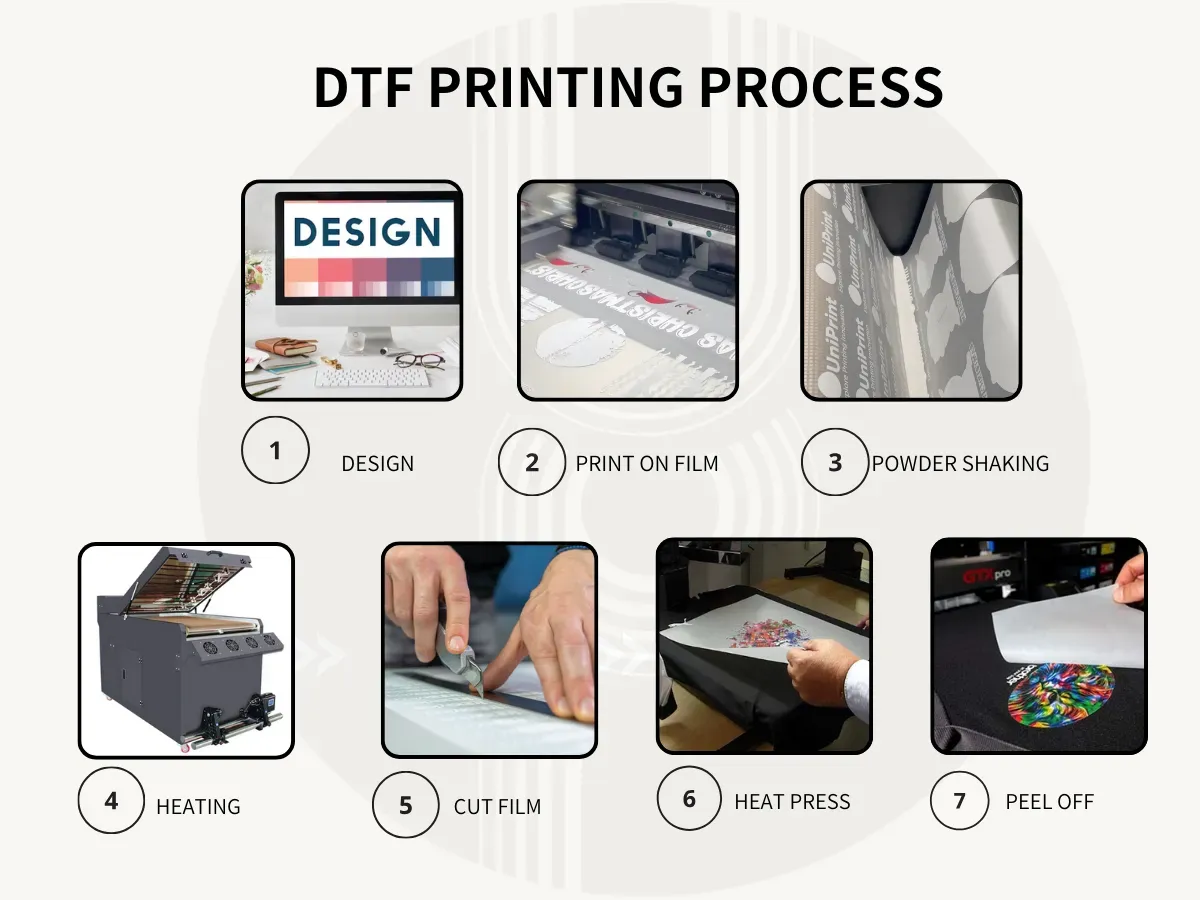
DTF post-processing is the final, critical stage that determines how durable your designs are once they leave the printer. This phase blends curing, washing, and finishing into a cohesive workflow that supports the DTF curing process, enhances DTF ink durability, and sets the stage for lasting wear. Shaping the outcome requires controlled DTF curing temperatures, as well as the right time and pressure during curing, while careful DTF washing steps remove residual powder and preserve color fidelity. Attention to longevity factors—substrate compatibility, ink and film quality, and finishing choices—helps boost DTF longevity and overall performance across multiple washes. Whether you’re printing hobbyist tees or running a production line, this introductory guide explains practical steps that optimize durability, color vibrancy, and wash-fastness through a proven DTF post-processing sequence.
Beyond the initial print, the finishing sequence for film-to-garment transfers emphasizes secure adhesion, color stability, and wash resistance across fabrics. Professionals describe this phase as a curing and powder-removal workflow, where heat-pressing, surface sealing, and controlled handling lock in detail without compromising hand feel. Emphasizing related factors such as substrate compatibility, ink and film quality, and protective top coats aligns the process with long-term durability and consistent results.
Understanding the DTF curing process: from heat to bond
The DTF curing process is the foundation of quality in any DTF workflow. It describes how the printed film, coated with adhesive and ink, is heat-activated to bond with the fabric. When done correctly, heat and pressure drive the ink particles into the fibers, creating a durable, flexible bond that withstands wear.
Effective curing hinges on controlling temperature, dwell time, and even pressure. Always refer to ink and film datasheets and run small tests before large batches to ensure consistent results. The goal is a strong, uniform cure without scorching or surface gloss loss, which influences color vibrancy and hand feel.
DTF curing temperatures: matching ink, film, and fabric
Selecting the right DTF curing temperatures requires considering ink chemistry, film type, and fabric substrate. Temperatures commonly fall within a moderate-high range, but exact values vary by product line. Correct temperatures ensure strong adhesion, minimal ink bleed, and proper color fidelity while preserving fabric integrity.
If you push temperatures too high, you risk scorching, edge delamination, or a stiff hand; too low and the bond remains partial and wash cycles degrade. Always perform a small test with sample swatches across fabrics to map the optimal curing temperatures for your specific DTF ink and film combination.
DTF washing steps for optimal durability and color retention
After curing, the washing steps remove residual powder and seal the print, playing a central role in durability. Gentle cycles, cool to warm water (30–40°C), and mild detergents help maintain color brightness and adhesion. The process you follow here can significantly influence wash-fastness.
Drying method matters too; air-drying is preferred, while high-heat machine drying can stress the bond. For powder removal, some workflows use dedicated cycles or light tumble; the key is to minimize agitation and heat damage while ensuring complete powder removal.
How DTF ink durability is built: adhesion, print texture, and finishing
DTF ink durability depends on the bond between ink, adhesive, and fabric. Improving durability involves proper curing, substrate compatibility, and selecting high-quality inks and films. A strong foundation reduces cracking, color loss, and edge lifting under repeated wear.
Finishing techniques such as compatible top coats or protective sealants can further enhance abrasion resistance and UV stability. By pairing the right finishing with solid curing and washing, you preserve crisp images and comfortable hand feel across many wash cycles.
Maximizing DTF longevity: substrate choice, care, and finishing
DTF longevity is the ultimate measure of post-processing success. Substrate compatibility, wear patterns, and material choices determine how the print ages. Selecting fabrics that respond well to the adhesive and ink helps extend life and minimize cracking after repeated laundering.
Establish a practical workflow that includes consistent heat-press parameters, validated wash settings, and periodic colorfastness testing. Routine quality checks post-wash help you catch delamination or color shifts early and guide adjustments for future runs.
DTF post-processing: best practices for reliable, long-lasting results
DTF post-processing is the final, critical stage that determines how durable your designs are after printing. It encompasses curing, washing, and finishing steps that together establish color vibrancy and wear-resistance for everyday use.
Best practices include starting with test runs, documenting heat-press settings, dwell times, and pressure for each fabric type and film/ink combo, and protecting finished garments from direct sun and harsh conditions. By treating DTF post-processing as an integrated workflow rather than isolated tasks, you improve longevity, color fidelity, and overall product quality.
Frequently Asked Questions
How do DTF curing temperatures impact DTF post-processing results and print durability?
In DTF post-processing, curing temperatures define how the film adhesive activates and how ink sits in the fabric. A typical range is 150–170°C (302–338°F) for 10–20 seconds, with even pressure to avoid scorching. Always test with the specific film and fabric to confirm durable bonding before larger runs.
What are the essential DTF washing steps in DTF post-processing to ensure clean powder removal and strong adhesion?
In DTF post-processing, the washing steps remove excess powder and seal the surface for wash-fastness. Use cool-to-warm water (30–40°C) with a mild detergent, gentle cycle, and avoid bleach or fabric softeners; air-dry when possible. Gentle powder-removal cycles help preserve bond and color clarity.
How does the DTF curing process affect color accuracy and DTF ink durability during post-processing?
In the DTF curing process, heat-pressing activates the adhesive and fuses ink into the garment, directly affecting DTF ink durability. Use the recommended temperature, time, and even pressure to avoid scorching or under-curing, which can reduce color fidelity. Validate results on a test piece to ensure color accuracy and abrasion resistance in your DTF post-processing workflow.
What factors influence DTF longevity after post-processing and how can you extend it?
DTF longevity is shaped by curing accuracy, washing effectiveness, substrate compatibility, and ink/film quality. Align fabric selection with adhesive strength, choose durable inks and films, and apply compatible finishing steps to extend life in DTF post-processing.
What are common issues in DTF post-processing caused by the DTF curing process, and how can you fix them?
Common issues in DTF post-processing often trace back to the DTF curing process. Symptoms include incomplete curing, powder residue after curing, or cracking after washing. Fixes include adjusting cure temperature and time, ensuring uniform contact, reducing pressure, and using gentler wash cycles.
How can finishing techniques in DTF post-processing improve DTF longevity?
Finishing techniques in DTF post-processing can significantly boost DTF longevity. Apply compatible top coats or protective sealants and consider UV-protective layers to improve abrasion resistance. These steps help maintain vibrancy and adhesion across many wears and washes.
| Topic | Key Points | Practical Guidance |
|---|---|---|
| Curing |
|
|
| Washing |
|
|
| Longevity |
|
|
| Practical workflow |
|
|
| Common issues |
|
|
| Best practices |
|
|
Summary
DTF post-processing is a cohesive workflow that determines the durability, color fidelity, and overall finish of your textile prints. By focusing on proper curing, careful washing, and durable finishing techniques, you can maximize longevity and customer satisfaction for every project. The approach ties together film and ink choice, substrate compatibility, and finishing steps to produce prints that endure through wear, washing, and sunlight. With methodical testing, documentation, and ongoing optimization, your DTF post-processing results will consistently meet expectations and deliver high-quality, long-lasting prints.