
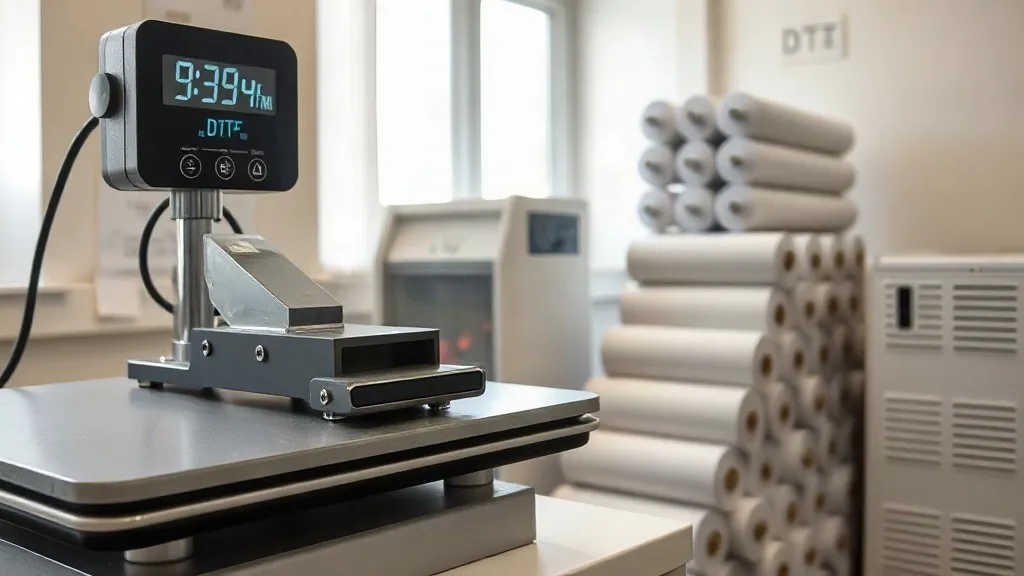
You have spent hours dialing in your heat press. You have tested pressure with a spring scale, verified temperature with an infrared gun, and timed your peel to the second. Yet, you still get the occasional print that cracks after a single wash or a transfer that peels at the collar. Before you tear apart your press settings again, step back and look at the room you are standing in. The ambient conditions of your workspace are a silent partner in every dtf transfers job you run. Humidity and temperature do not just affect how you feel while working; they dictate how your film, powder, and ink behave at a chemical level. Ignoring them is like baking a cake without measuring the flour.
In this guide, we are going to look at the environmental factors that rarely get discussed but frequently cause the most frustrating, intermittent failures in a print shop. We will cover how moisture interacts with your materials, how temperature swings affect adhesion, and what you can realistically do to stabilize your environment without building a cleanroom.
Why Relative Humidity Is the Enemy of DTF Powder
If there is one element that causes more silent failures than any other, it is moisture. DTF powder, typically a thermoplastic polyurethane (TPU), is hygroscopic. This means it actively absorbs moisture from the air. When you open a fresh bag of powder, it is dry and free-flowing. Leave it exposed in a humid room for an hour, and it will start to clump. Those clumps are not just an aesthetic problem. When you shake that powder onto a wet print, the clumps prevent the adhesive from melting evenly during the curing process. The result is a transfer with weak spots that will fail in the wash.
The solution is not just to seal your powder container tightly, although that is a good start. You need to monitor the relative humidity in your shop. Ideally, you want to keep it between 40% and 60%. If you are in a region with high humidity or a basement shop, a dehumidifier is not a luxury; it is a necessary piece of equipment. You will notice the difference immediately in how your powder flows and how consistently your transfers cure.
The Temperature Trap: Cold Film and Brittle Prints
Temperature is the other half of the equation. Most people think about temperature only in terms of the press platen. But the temperature of the film itself before it hits the press matters just as much. If your workspace is cold, your film becomes stiff. When you place a cold sheet of dtf film onto a cold shirt, the ink and powder layers are less pliable. As the press closes, the sudden heat shock can cause the film to warp or the powder to shift before it melts. This is a common cause of the dreaded "ghosting" effect or incomplete transfer edges.
Conversely, if your shop is too hot, the ink can become overly tacky on the film, making it difficult to handle and leading to smudges. The sweet spot for both your materials and your comfort is a consistent room temperature around 68 to 72 degrees Fahrenheit (20 to 22 degrees Celsius). If you cannot control the whole room, at least store your film and powder in a climate-controlled cabinet or a separate room and bring them out only when you are ready to print.
How Static Electricity Ruins Fine Details
Low humidity does not just dry out your skin; it turns your print shop into a static generator. When the air is dry, the friction of peeling film or handling garments builds up static charge. For DTF, this is particularly problematic with fine details. Static can cause the powder to jump to areas of the film where it is not wanted, creating a speckled, dusty look on the final transfer. It can also make the film cling to itself or to your hands, making it impossible to lay flat.
If you are in a dry climate or a winter heating season, consider adding a humidifier to your workspace. Keeping the humidity at that 40-60% range will naturally dissipate static. In a pinch, an anti-static mat or a grounded wrist strap can help, but controlling the air is the most effective long-term fix.
Seasonal Shifts: Why Your Summer Prints Differ from Winter Prints
Many print shop owners notice that their failure rates spike during seasonal transitions. This is not a coincidence. As the seasons change, the ambient humidity and temperature of your shop change, even if your press settings stay the same. A setting that worked perfectly in July might fail in January because the air is drier and the film is stiffer. This is why it is crucial to recalibrate your process when the weather changes.
Keep a log of your press settings alongside the temperature and humidity readings for the day. Over time, you will see patterns emerge. You might find that you need slightly more pressure or a longer dwell time on dry winter days to compensate for the stiffer film. This kind of data-driven adjustment is what separates a hobbyist from a professional operation.
Practical Steps to Stabilize Your Workspace
You do not need a full laboratory setup to get consistent results. Here are the actionable steps you can take today to bring your environment under control.
- Invest in a hygrometer: This cheap device measures relative humidity and temperature. Place it near your workstation and check it daily.
- Use a dehumidifier or humidifier: Depending on your climate, these appliances can keep your shop in the ideal range. Empty and refill them as part of your daily routine.
- Store materials properly: Keep powder in airtight containers and film in sealed bags. Do not leave them exposed to the air overnight.
- Acclimate your garments: If you store shirts in a cold warehouse, bring them into your print room a few hours before pressing. This prevents thermal shock.
- Control static: Use anti-static spray on your work surface or wear a grounded strap if you handle a lot of film.
When to Look for dtf transfers near me
Sometimes, despite your best efforts, the environment wins. If you are a small shop without the budget for climate control, or if you are a hobbyist working out of a garage, you might find that your failure rate is simply too high to be profitable. In those cases, it is worth considering sourcing your transfers from a professional supplier who has already solved these problems. Searching for dtf transfers near me can connect you with local printers who operate in controlled environments, ensuring that every transfer you receive is cured correctly and ready to press. This allows you to focus on what you do best: designing and pressing, without worrying about the humidity in your basement.
Frequently Asked Questions
How does humidity affect the shelf life of DTF transfers?
High humidity can cause the powder layer to absorb moisture over time, leading to clumping and poor adhesion when you finally press the transfer. Always store transfers in a cool, dry place, ideally in a sealed bag with a desiccant packet.
Can I use a regular home dehumidifier in my print shop?
Yes, a standard home dehumidifier is sufficient for most small to medium shops. Just make sure it has enough capacity for the square footage of your workspace. You will be surprised at how much water it pulls from the air, even in seemingly dry climates.
Why do my prints crack more in the winter?
Winter air is typically drier, which makes the film stiffer and more prone to static. Additionally, cold garments can cause the adhesive to cool too quickly before it penetrates the fabric. Pre-warming your garments and using a humidifier can help mitigate this.
Does the temperature of my heat press affect the room?
A heat press does radiate heat, but unless you are running a high-volume operation with multiple presses, it is unlikely to significantly change the ambient temperature of a well-ventilated room. However, it can create local hot spots, so ensure proper airflow.
What is the ideal humidity for pressing DTF transfers?
Aim for a relative humidity between 40% and 60%. This range keeps the powder dry enough to flow but prevents the static buildup that occurs in drier conditions.