
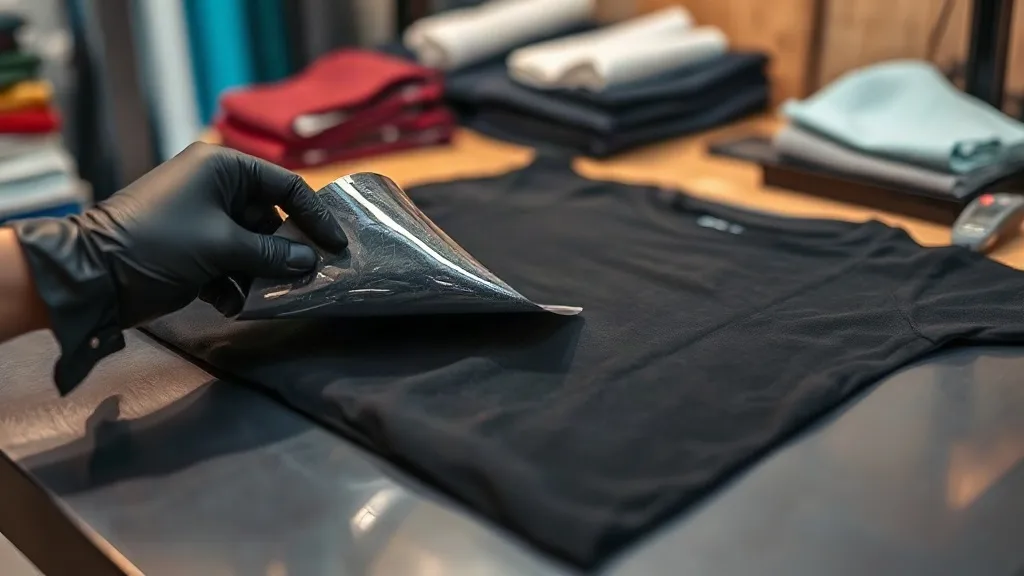
A finished shirt that looks perfect on the press and then lifts at the corner after two washes is one of the most frustrating things a print shop deals with. The customer sends a photo, you reprint for free, and the whole job turns into a loss. What most operators miss is that adhesion failures rarely come from a single bad variable. They come from small errors stacking on top of each other, and the print only fails once enough of them line up. Understanding how dtf transfers actually bond to fabric gives you a diagnostic path instead of guesswork.
This guide walks through the five failure points that cause lifting and peeling, how to test each one, and what to change when you find the culprit. It is written for shops that already press prints and want fewer comebacks, not for people still deciding whether to buy a printer.
How the Bond Actually Forms
A DTF print has three layers that matter for adhesion: the printed ink film, the hot-melt powder fused to the back of it, and the fabric surface it lands on. When you press, the powder melts and flows into the fibers. As it cools, it locks in place. If the powder never fully melted, if the fabric surface repelled it, or if the cooling happened under pressure that was released too early, the bond is weak from the start. It may still hold for a few days, which is why failures often show up after the garment has been worn and washed rather than straight off the press.
That delayed failure is the key insight. A print that peels in the wash was almost always already compromised before it left your shop. The wash just exposed it.
Failure Point 1: Incomplete Powder Melt
This is the most common cause of lifting corners, and it usually traces back to temperature or time. Hot-melt powder needs to reach its full melt point and stay there long enough to flow into the fabric. A press that reads 160°C on the display may be delivering less at the platen, especially on older machines or when the upper platen has cooled between presses.
How to test it
Press a test print with your normal settings, let it cool completely, then try to lift a corner with a fingernail. If it releases with light pressure, the melt was incomplete. Increase dwell time by three to five seconds before increasing temperature, since overheating can cause shrinkage and dye migration on polyester. If that does not solve it, verify platen temperature with an infrared thermometer rather than trusting the display.
The pressure trap
Too little pressure prevents the powder from contacting the fabric evenly. Too much pressure squeezes the melted powder out past the edges of the design, thinning the bond in the center. Medium, even pressure is the target. A quick check: after pressing, the print edges should look slightly embedded into the fabric texture, not sitting on top like a sticker.
Failure Point 2: Fabric Surface Contamination
Powder cannot bond to something that is not the fabric. Fabric softeners, anti-static treatments, and sizing agents all leave a film that blocks adhesion. New garments straight out of the poly bag are the worst offenders because you cannot see the coating.
Pre-pressing the garment for three to five seconds before laying down the transfer does two things: it drives off moisture and it pushes surface coatings aside. Skipping this step is one of the most common reasons a dtf print fails on an otherwise perfectly good shirt. If you are pressing on a fabric you have not used before, pre-press a scrap piece and check whether the surface feels slick or waxy afterward. If it does, consider a light wipe with a lint-free cloth before pressing.
Failure Point 3: Moisture in the Film or Fabric
Water turns to steam under the press, and steam pushes the print away from the fabric exactly when the powder is trying to bond. Cotton and blends hold ambient moisture, and film stored in a humid room absorbs it too. This is why adhesion problems cluster in winter and during rainy seasons in shops without climate control.
Store film and finished prints in sealed bags with a desiccant pack. Pre-press every garment, not just the ones that feel damp. If your shop runs humid, a small dehumidifier near the storage area pays for itself in fewer reprints.
Failure Point 4: Peeling the Carrier Too Early
Hot peel and cold peel films behave differently, and using the wrong technique for the film you have will damage the bond. Cold peel films need to cool completely, often a full minute, before the carrier sheet comes off. Pull it warm and you will stretch the ink film and weaken the powder layer underneath.
Peel in one smooth motion at a low angle rather than yanking upward. If you feel resistance, stop and let it cool longer. The carrier should release almost on its own when the print is ready.
Failure Point 5: Washing Before the Bond Cures
Hot-melt bonds continue to strengthen for roughly 24 hours after pressing as the polymer fully crystallizes. A shirt washed the same day it was printed is far more likely to fail than one washed two days later. Tell customers this, and put it on a care card if you ship orders. It is a small instruction that prevents a surprising number of complaints.
A Quick Diagnostic Sequence
When a print fails, work through these checks in order rather than changing everything at once:
- Confirm platen temperature with an infrared thermometer.
- Press a test print and check corner adhesion after full cooling.
- Add three seconds of dwell time and retest.
- Pre-press the garment and retest.
- Check storage conditions for film and powder.
Change one variable at a time. Shops that adjust temperature, pressure, and time simultaneously usually end up with a setting that works by accident and cannot be reproduced when a new operator takes over the press.
When the Problem Is the Print Itself
Sometimes the press settings are fine and the print was compromised before it ever reached the platen. Under-powdered prints, film stored in direct sunlight, and prints that sat unused for months all bond poorly regardless of technique. If you buy ready-made prints rather than producing in-house, source from a supplier who ships fresh stock in sealed packaging and can tell you the production date. Searching for dtf transfers near me is a reasonable starting point, but ask about turnover and storage before you commit to a bulk order. A supplier who cannot answer basic questions about film age is a risk to your reprint budget.
Keeping a small log of press settings, film batches, and failure reports will eventually show you patterns you would never spot from individual jobs. Most shops find that one or two variables account for the majority of their adhesion problems once they start tracking.
Frequently Asked Questions
Why does my DTF print peel only at the corners?
Corners cool fastest and receive the least even pressure, so incomplete powder melt shows up there first. Increase dwell time slightly and check that your press platen is level. If the corners still lift, the pressure may be too high in the center, thinning the bond at the edges.
Can I fix a print that has already started to lift?
Sometimes. If the print has not been washed, re-pressing at the correct temperature and time with a protective sheet can reflow the powder and save it. Once a print has been through a wash cycle, the bond is usually too compromised to recover reliably, and reprinting is the safer choice for customer satisfaction.
Does fabric color affect adhesion?
Not directly, but dark garments often carry heavier dye loads and surface treatments that interfere with bonding. Pre-pressing matters more on these fabrics, and some very dark polyester blends benefit from a slightly longer dwell time to ensure the powder flows properly.
How long should I wait before washing a DTF-printed shirt?
Wait at least 24 hours, ideally 48, before the first wash. Wash inside out in cold water and avoid fabric softener, which coats the print and slowly degrades the bond over repeated cycles.
Is adhesion worse on certain fabric types?
Yes. Smooth, tightly woven synthetics with surface coatings are the hardest to bond, while cotton and cotton-rich blends accept prints most readily. If a fabric keeps failing, test a scrap piece with a longer dwell time before running a full order.